




Be bold,
back the brave
We aim to build a €100M fund to secure access to news in every European country.

What began with secret files and a global reporting network continues to reverberate a decade later: triggering enforcement action, prompting political resignations, and strengthening policy.
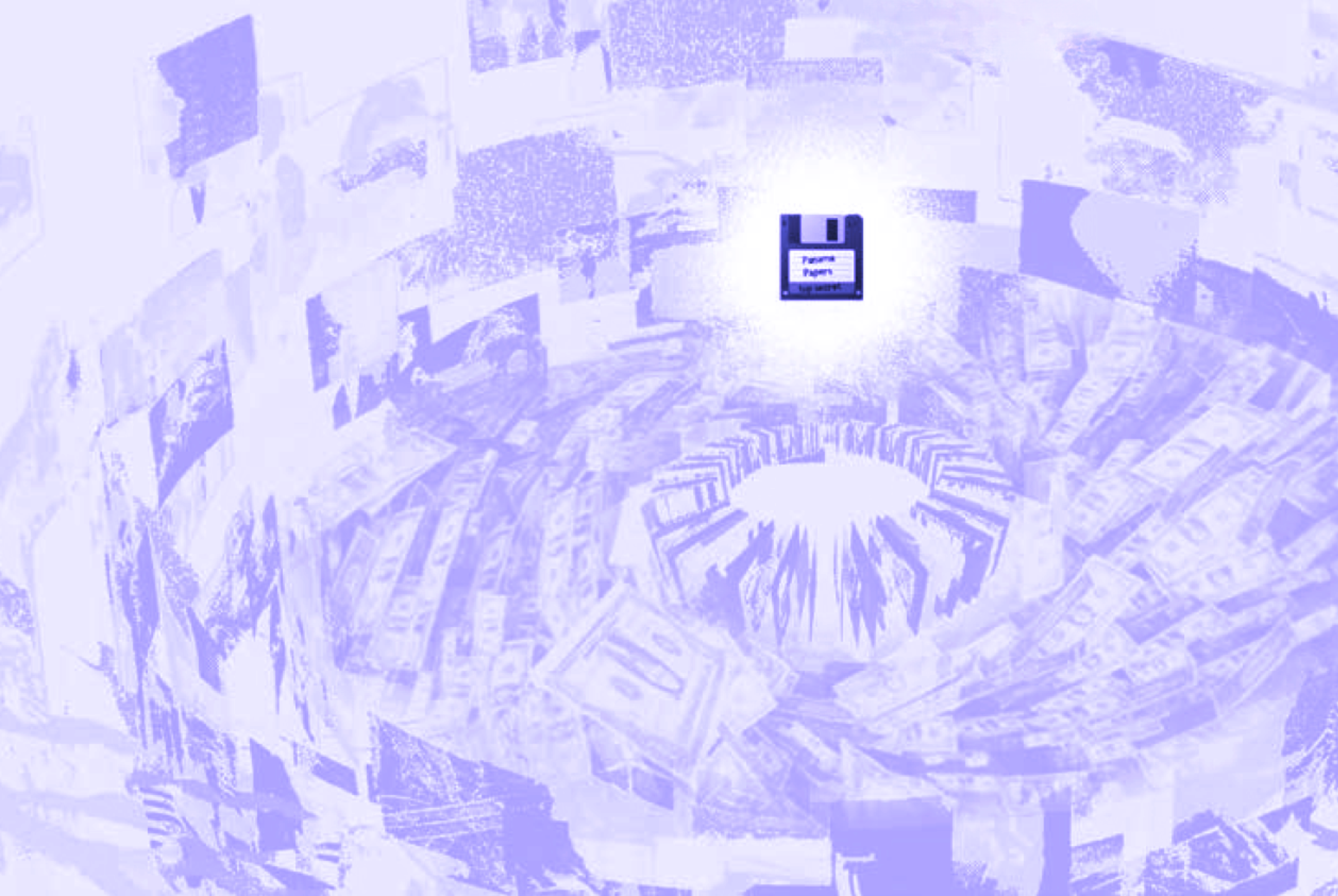
For Hamish Boland-Rudder, ICIJ’s Production Editor, one of the odd satisfactions of the past decade comes on paper. He is reading a thriller, turning pages, and there it is: “Panama Papers,” no longer only the name of an investigation, but shorthand for a whole world of hidden money and offshore deceit.

Ten years after publication, the investigation is still surfacing in courtrooms and policy fights: in London, where former Nigerian oil minister Diezani Alison-Madueke is on trial; in Germany, where the first Panama Papers-linked criminal case has opened; and in the continuing tally of tax recoveries, prosecutions and reform efforts that the reporting helped set in motion.
This is what a decade of impact looks like. The Panama Papers triggered immediate political shock, but the impact kept unfolding long after the first front pages disappeared.
According to ICIJ’s accounting, the revelations helped set off more than 150 audits and investigations in 79 countries within months of publication. Over the ensuing decade, that number has ballooned to the point that counting it has become nearly impossible.
//videourl//
Iceland’s prime minister resigned after protests. Pakistan’s prime minister was later disqualified from office. Mossack Fonseca shut down in 2018. Economists estimate that tax authorities worldwide have recovered at least $1.3 billion as a result of the reporting, a figure that is likely incomplete because many agencies do not publish precise totals.
Gerard Ryle, ICIJ’s executive director, later called it “a Watergate moment of our time.”
“The Panama Papers were a Watergate moment of our time”
Some of the biggest changes were harder to compress into a headline. In Brussels, the investigation jolted company ownership back to the centre of the debate. Tove Maria Ryding, an international tax justice expert who has spent years working on transparency, remembers how quickly the mood shifted. Before the Panama Papers, she says, rules on who really owned companies had been negotiated without enough urgency. Then the stories were published, and lawmakers reopened the anti-money laundering directive. “Suddenly, everyone realised that anonymous companies constitute a very risky issue for our entire society.”
The public mood shifted, too. Tove says that, before the Panama Papers, tax transparency could feel abstract even to friends and family. Then it suddenly didn’t. “It was the feeling of explaining to a taxi driver on the way to the airport what I did for a living and getting a hug at the end,” she says. “The public momentum was so tangible, and it was so global.”
“It was the feeling of explaining to a taxi driver on the way to the airport what I did for a living and getting a hug at the end”
Change did not happen neatly. Pressure on shell companies pushed money elsewhere, into trusts and other vehicles that offered a different kind of cover. Later ICIJ investigations, including the Paradise Papers and Pandora Papers, picked up where the Panama Papers left off.
But to understand how it began, it helps to go back to a small office in Washington.
A few days before publication, Hamish was in his office at ICIJ, crowded around a computer with colleagues, waiting for a Skype call. Two reporters had just returned from confronting Iceland’s prime minister with evidence linking him to an offshore company. When Jóhannes Kr. Kristjansson and Sven Bergman appeared on screen, they could barely get the words out.
“Johannes was just flabbergasted at what had just happened,” Hamish recalls. “He couldn’t believe it.” Faced with questions about Wintris, the offshore company tied to him and his wife, Sigmundur Davíð Gunnlaugsson had bristled, called them “totally inappropriate” and walked out.
//videourl//
By then, the newsroom had spent almost a year working through one of the largest leaks in reporting history. The files from Mossack Fonseca, a Panamanian law firm and corporate service provider, kept arriving in tranches. The team was continuously building tools, onboarding partners, checking stories and trying to solve the problem every major investigation faces: how to go for comment without giving powerful people too much time to cause damage.
Another sign arrived that same week. ICIJ had sent questions to the Kremlin about offshore deals linked to Vladimir Putin’s circle. The expectation inside the newsroom was that Moscow would ignore them. Instead, it responded publicly and tried to discredit the investigation before publication. Gerard Ryle describes the Kremlin’s move as a gift. “It created an audience for us, but it also eliminated any doubt,” he says.
“One of my colleagues, who did a lot of interviews, got a call from his mother who told him to shave and get some sleep because he looked terrible on the TV”
When the stories went live on April 3, 2016, the reaction was immediate. Traffic spiked and social media exploded. The reporting led nightly bulletins across countries. By the following morning, protesters were on the streets of Reykjavík. Then came Pakistan, London, Malta, and Panama City. Inside ICIJ, the mood was less triumph than dazed exhaustion. The office was not built for this kind of global attention. It was, as Hamish puts it, an unsecured second-floor space where random people could simply walk in. The phones rang constantly. “One of my colleagues, who did a lot of interviews, got a call from his mother,” Hamish says. “She told him to shave and get some sleep because he looked terrible on the TV.”
In the early days, the files sat on a research computer in Hamish’s office before they could be processed and made searchable. Partners flew into Washington with almost no detail beyond the fact that ICIJ had something big. They sat behind him and started running names. One BBC journalist kept gasping as results appeared on screen. “Oh, my God,” he said, again and again.
The leak was massive, technically messy and still growing. ICIJ built bespoke tools to index the files and create a secure search interface for reporters. Structured data made it possible to map links between clients, companies, addresses and intermediaries, turning a pile of documents into something reporters could navigate. Hamish describes it as “basically” a Google for journalists. That took technical expertise, secure servers and computing power. It also meant doing the work repeatedly as new material arrived. Files had to be re-indexed. Duplicates had to be stripped out. Stories already underway had to be revisited in light of fresh evidence.
Tove says people in the transparency world understood immediately what kind of work had gone into the reporting. It was not only the scale of the documents. It was the technical complexity, the depth and the nerve required to challenge some of the world’s most powerful people. “It takes courage,” she says.
And that was certainly true. Newsrooms and journalists alike faced backlash from politicians, media owners and authorities following publication. One case that stayed with Hamish came from Finland, where a partner journalist received letters threatening to raid her home to seize her reporting materials. Even in a country with a strong reputation for press freedom, the response could turn ugly.
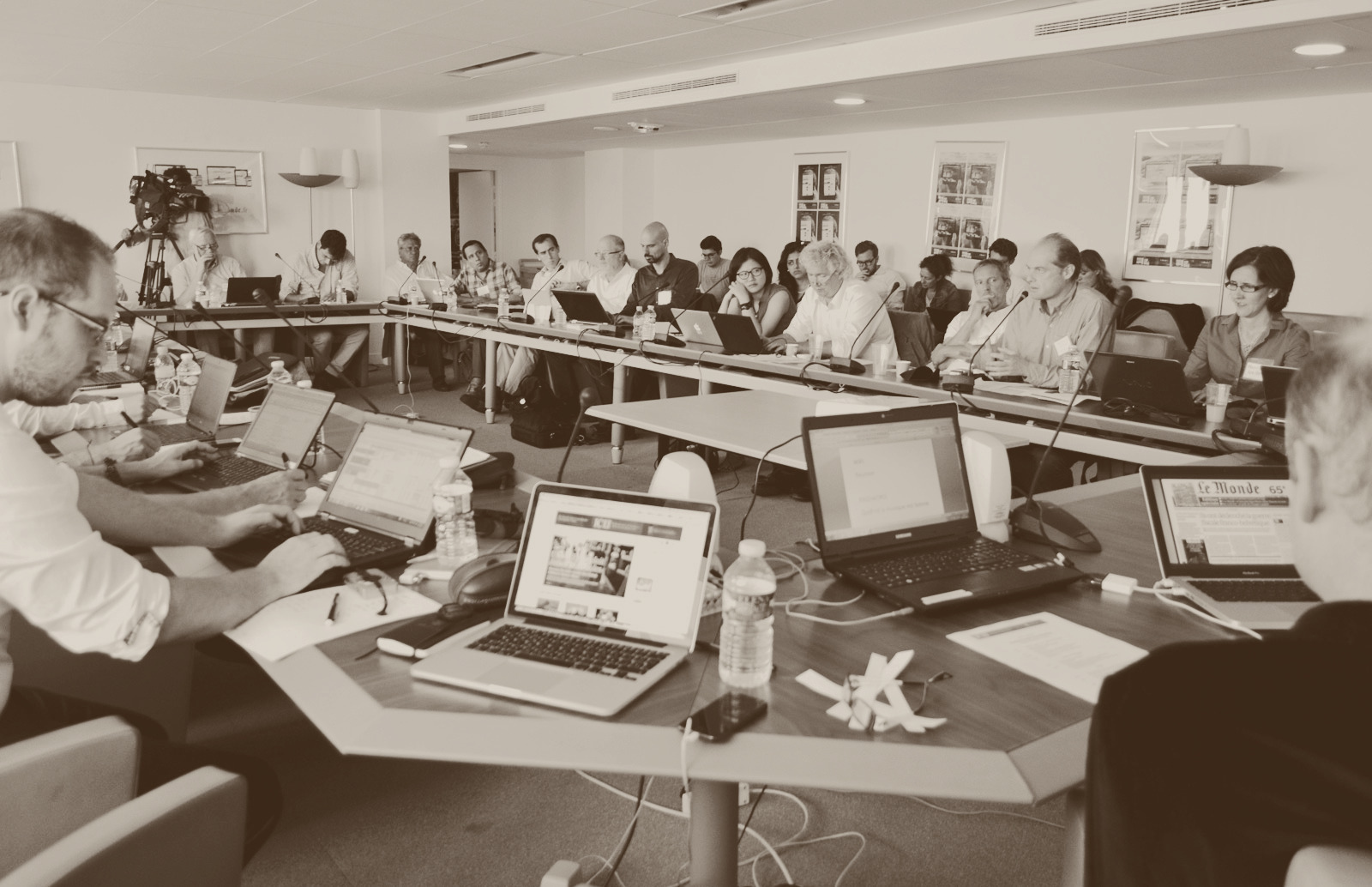
June 30, 2015, was Hamish’s 29th birthday. He spent it in Washington with 50 reporters, a growing pile of secret files and the first big Panama Papers partner meeting. The gathering had the feel of a mini conference crossed with a working newsroom. ICIJ, and two reporters from German newspaper Süddeutsche Zeitung who had received the leaked files, opened with structured presentations on what they already knew, what still seemed to be coming in, and the early storylines beginning to emerge from the files. Then reporters compared what they had found in their own countries.
.png)
By that point, there was already a virtual newsroom and an online database. They were trying to solve practical problems: how to keep the files secure, how to protect the source, and how to build enough trust that no one would leak the story before everyone was ready. They were dealing with source protection, powerful people and a leak too sensitive to mishandle.
“It was a really fun way to spend my birthday, actually,” Hamish says, “with a bunch of journalists from around the world discussing secret leaked files.”
By then, roughly 100 journalists were already involved. By publication, around 380 reporters had worked on the investigation, more than double the scale of anything ICIJ had done before.
“Ambitious journalism is still possible if we are all willing to work together”
The collaboration also made financial sense. Large commercial outlets had already become less willing to carry the cost of long, technically demanding investigations. Collaboration spread that burden and made it possible to do work no single newsroom could have managed alone.
For Hamish, one of the Panama Papers’ lasting legacies was proving that “ambitious journalism is still possible if we are all willing to work together.”
One of the clearest lessons of the Panama Papers is that impact does not move at the pace of a funding cycle. The infrastructure, security systems, technical staff and reporting networks that made the investigation possible could not be assembled overnight. The investigation itself took almost a year. And the consequences took years to unfold.
.png)
Hamish is frank about how difficult it has been to track the full consequences over a decade and across dozens of countries. Court cases drag on. Political reactions shift. Reforms are announced, diluted or revived. Some of the most important results only become visible much later.
“As long as there are new ways to hide things, it is up to journalists to continue reporting”
Limelight began backing ICIJ in 2022. The Panama Papers is a good example of what major investigations actually require: not only the money to publish a large cross-border story, but the support to keep the newsroom running, protect the network behind it and follow the trail after the initial shock has passed. At 10 years old, the Panama Papers is less a finished chapter than a case study in why long-term funding matters.
“There was one thing at the centre of everything, and that was secrecy,” Gerard says. “And as long as there are new ways to hide things, it is up to journalists to continue reporting.”

