






Be bold,
back the brave
We aim to build a €100M fund to secure access to news in every European country.


////
The Organized Crime and Corruption Reporting Project (OCCRP) is a platform for investigative reporting that empowers a global network of independent media outlets and journalists. In 2024, the non-profit delivered over 100 high-profile investigations. Less well known is the fact that OCCRP supports 71 member centres with critical resources, from data-processing capacity and editorial coordination to digital and physical security measures. Paul Radu, head of innovation, described how the platform’s industry-wide initiatives help the information ecosystem thrive.
////
Paul Radu and Drew Sullivan founded OCCRP in 2007. Paul explained, “I’d co-founded the Romanian centre for investigative reporting and Drew was doing the same type of work in Bosnia. We first connected to collaborate on some cross-border reporting.” That regional project has grown into a multi-national non-profit with over 65 editors on six continents, along with 70+ media outlets and regional partners.
“Our global network is the lifeblood of our reporting. The decentralised model allows OCCRP to expose criminal connections across continents, while local member centres inform regional audiences in their native languages. “We’re not the typical media organisation that values click counts above all else – we measure our impact in how much illicit money is recovered and redirected to the public good.”

An estimated USD 3.1 trillion in illicit funds flowed through the global financial system in 2023, according to the Nasdaq Verafin Global Financial Crime Report published in December 2024. The report exposed how money laundering bankrolled a range of destructive crimes including an estimated USD 346 billion in human trafficking, USD 782.9 billion in drug trafficking, and USD 11.5 billion in terrorist financing in 2023.
Paul estimated that investigative reporting networks worldwide have looked into USD 1 trillion in illegal funds over 15 years, and that OCCRP itself has aided in the recovery of USD 10 billion from various criminal parties. “Over the years we’ve built a blueprint for what can be done, and I’m very proud of what we’ve accomplished. But it’s still not enough considering the scale of the problem. At the same time, costs are rising and independent media are increasingly under threat. That’s why we’re constantly working to refine existing tools and introduce new ones to empower the member centres.”
Collaboration with member centres often starts with a local journalism platform requesting access to the OCCRP Aleph investigative data platform to process large quantities of data. “Our networks understand that money laundering schemes need local enablers like lawyers and accountants to succeed. By combining data sets from around the world with local information, investigative platforms can develop their hypotheses and craft their narratives in a way that law enforcement agencies cannot.”
If the data reveals cross-border activities, the next step in working together might be a request for OCCRP to coordinate the project and engage additional foreign partners. “At that point OCCRP designates an editor to work with the local organisation and to build an international team. Sometimes the partners come from our network, other times the lead journalist platform may introduce one of their own trusted connections.”
Paul emphasised that while OCCRP plays a big role in creating the global infrastructure that enables local organisations to cooperate across borders, they always adapt their processes to local realities. “A sizeable portion of OCCRP’s budget goes straight to the centres for investigative reporting. But we never go in and say, ‘Hey, this is the OCCRP way of doing things.’ We share what we know and learn from the people on the ground.”
One important element OCCRP shares, is how to understand and deal with the digital and physical security risks of working at this level. It provides hands-on training, and regular audits of instruments, laptops, and phones. “We strive to ensure that local investigators are as safe as possible, knowing that the enemy is much more powerful than we can ever be because they have unlimited resources. If their safety is threatened, we have the means to put them out of harm’s way until things calm down.”

The rise of SLAPPS (strategic lawsuits against public participation) is a growing threat to public interest journalism. These bogus lawsuits are designed to intimidate and financially burden newsrooms and prevent them from doing their jobs. In 2022, OCCRP helped to establish ‘Reporters Shield’, a membership programme offering legal protection services to the entire ecosystem. “While Drew and I are still on the board, Reporters Shield is a separate organisation. The clients they’ve enlisted so far are mainly investigative reporting centres. We know that if the ecosystem thrives outside of our control, we too will thrive.”
More recently, OCCRP joined forces with the Global Forum for Media Development to develop the Journalism Cloud Alliance. “We just completed the first industry-wide audit of the cloud computing power needed (and the estimated costs) for investigative reporting centres to work with more data and process it locally.”
Cloud infrastructure enables secure storage and exchange of sensitive files between investigative journalists and analysts collaborating on cross-border projects worldwide. The infrastructure also simplifies the process of releasing multiple stories simultaneously. These collaborations have revolutionised journalism by using distributed computing to reveal corruption, surveillance, and corporate misconduct on a global scale. The investigations often involve processing millions of leaked documents, images, and terabytes of data. This data is systematically stored, converted into readable formats, translated, and analysed by reporters to publish stories tailored to local audiences.
Like many cloud service users, news organisations face soaring costs and restrictive contracts imposed by major providers. Contributing to a report published by the Center for Journalism & Liberty in March 2024, Paul said: “The cost of this computing power is too high and increasing by the day as we have to process more and more data. We’re paying over USD 12,000 per month at OCCRP alone and most centres around the world can’t begin to think about processing their own large volumes of information. This doesn’t even include being able to crunch video, which is a lot more demanding and costly.” And at the time of writing this annual report in early 2025, that figure of USD 12,000 per month had risen to USD 30,000 per month.
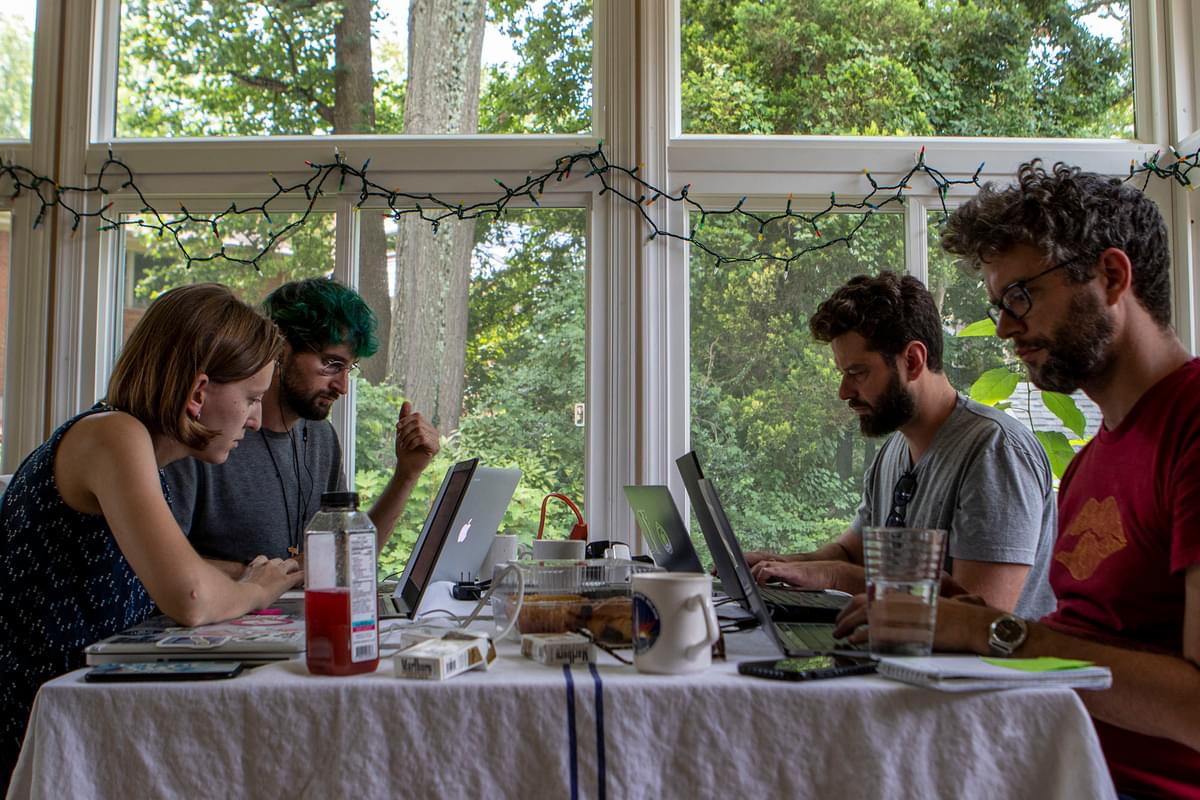
Concerns about unpredictable price hikes compound these challenges. Meanwhile, the demand for computing resources continues to grow. The need is intensified by larger leaks, more frequent data dumps, and the emergence of AI-driven tools for processing, analysing, and interpreting data in real-time. Lack of affordable solutions may stifle investigative projects due to financial pressures. The Journalism Cloud Alliance aims to tackle these issues by lowering cloud service costs, freeing newsrooms to prioritise their vital work.
With the help of two grants from Limelight Foundation OCCRP is hoping to make an even bigger impact from its new headquarters in Amsterdam. Having an office in an EU member state makes it easier to attract senior talent, and to participate in calls for proposals from the European Commission and international development programmes across the EU. “Limelight’s multi-year grants have helped us to develop the organisation, in contrast to other forms of funding that are linked to a specific region or project.” The first grant prioritised the relocation from Sarajevo and enhanced the digital and physical security of OCCRP and its member centres; the second focuses more on development.
“There are numerous advantages to being in the Netherlands, and having offices there is really crucial for us,” confirmed Paul. “That’s why we’ve established Amsterdam as our core point, where we can work with data sets and enable collaborations in a safer environment, in a place where journalism and this type of work are truly respected.”

