





Be bold,
back the brave
We aim to build a €100M fund to secure access to news in every European country.

In Serbia, KRIK’s investigative reporting is building a relationship with readers. They have grown their audience by 28 per cent and quadrupled reader donations in the past 18 months – all whilst inspiring readers to take action in the fight against corruption

On a sunny afternoon in San Francisco, a crowd of 200 people listens intently to news reports from their home country. On a street in Belgrade, a man holds a sign with a QR code linking to reports of organised crime. In Brussels, European politicians demand sanctions against human rights violators in Serbia. Three seemingly unconnected events, but they share one thing in common: all were inspired by KRIK’s fearless investigative reporting exposing organised crime and corruption in Serbia.
KRIK (short for Crime and Corruption in Serbian) was founded ten years ago by a small team determined to fill a glaring void in the country’s media landscape. “We wanted to build something that was missing,” says Jelena Vasic, one of KRIK’s founders. “We wanted to work on cases no one else was willing to tackle because it meant talking about the President, the Prime Minister, the ministers,” Jelena adds. That mission is at the heart of their reporting, but also in the very name they chose for the organisation. “Our name also means ‘scream’ in Serbian. We wanted to scream to our readers what was happening behind their backs,” says Jelena.

On the first of November 2024, the train station canopy in the Serbian town of Novi Sad collapsed, killing 16 people. As soon as this happened, KRIK got to work investigating the collapse, exposing the years of systemic corruption in local, state-owned companies that led to the incident. The tragic incident has resonated with Serbians both in Serbia and within the Serbian diaspora, sparking some of the largest anti-corruption protests the country has ever seen.
“Thanks to organisations like KRIK, who have been at it for 10 years, people are slowly starting to digest the truth” - Rajko Radovanovic
Inspired by this movement, Rajko Radovanovic, a Serbian-American IT professional, worked with others in the diaspora to organise solidarity protests in the US. Rajko credits KRIK for helping Serbians open their eyes to the depth of corruption: “Thanks to organisations like KRIK, who have been at it for 10 years, people are slowly starting to digest the truth,” he says. Their group fundraised for the student anti-corruption movement back in Serbia and shared KRIK’s investigations at protests. “When organisers read out news from KRIK, people were booing as they heard the details of corrupt officials,” recalls Rajko. “Everyone realised the scale of corruption and impunity.” This scene underscores the global reach of KRIK’s work. For nearly a decade, the outlet has been exposing the nexus of organised crime and political power in Serbia, sparking civic action at home and abroad.
“KRIK is willing to tackle stories others won’t risk themselves to go after. Their integrity and fearlessness are unmatched,” says Rajko. A quick search of KRIK on Reddit shows he’s not alone. Comments like “People, these are the strongest journalists we have—support them” and “Insajder and KRIK are the center of our journalism today… whoever funded them, for whatever reasons, have at least helped to unravel this mafia in power” are common in threads about crime, corruption, and media in Serbia.
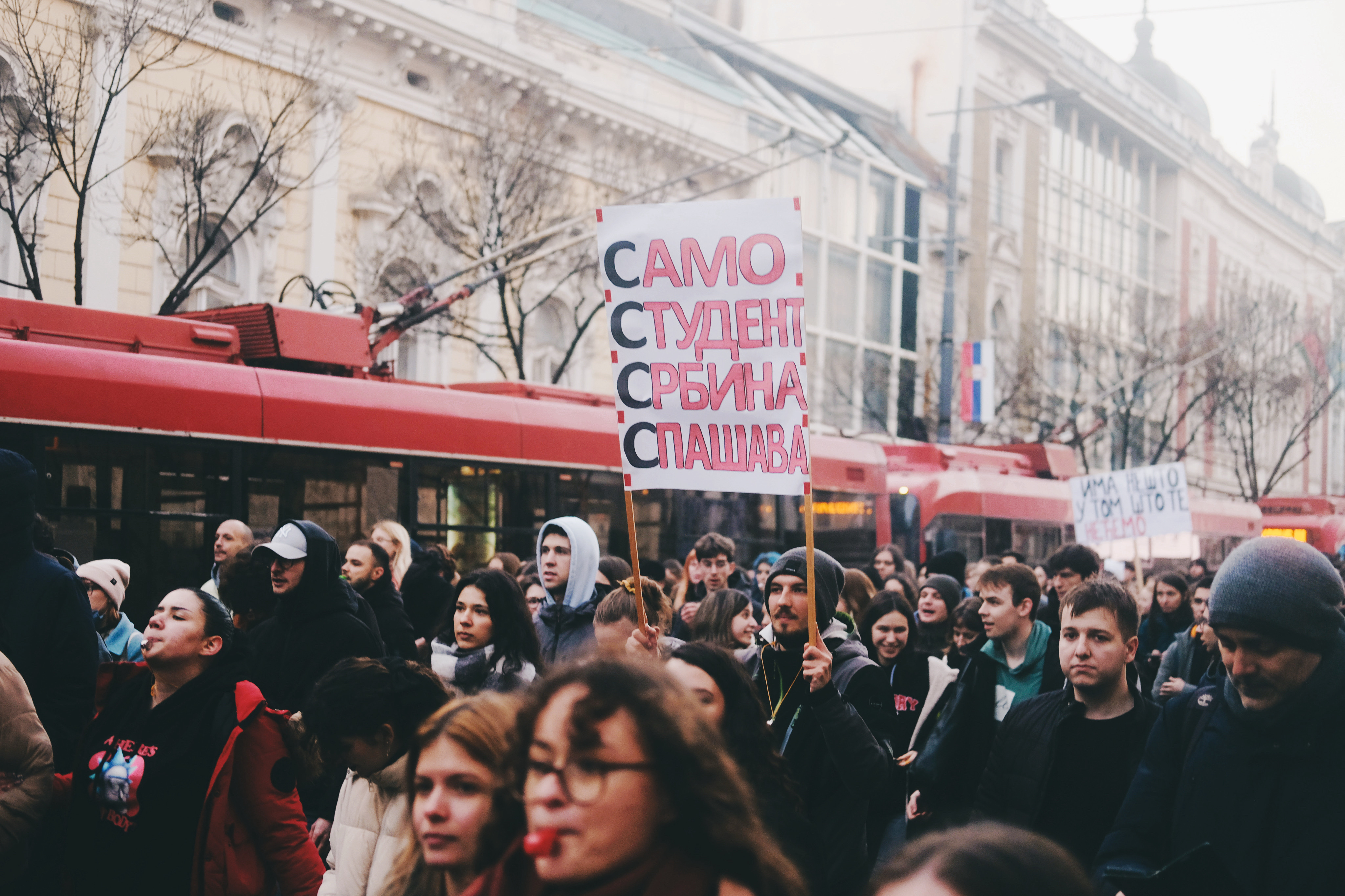
KRIK embraces the symbiotic relationship it has with its readers. Whilst KRIK reporters would like to see their investigations drive prosecutions and accountability by Serbian authorities, they recognise impact looks different in Serbia. “Our audience knows that the institutions are not doing their job, so there’s an understanding that they should do something about what we expose. For example, one man took a sign with a QR code that linked to one of our investigations directed to the criminal prosecutor: Scan and do your job,” Jelena explains.
But KRIK’s investigations don’t just inform citizens, they’ve reached international institutions that can exert pressure too. In October 2025, the European Parliament warned that Serbia’s government was mounting a “serious attack on already endangered media pluralism,” citing one of KRIK’s reports as evidence. A month later, the European Commission echoed those concerns in its official Serbia report, adding details from another KRIK investigation that revealed Serbian passports were issued to hundreds of Russian citizens outside official procedures (a finding flagged as a potential EU security risk). These aren’t isolated cases: in the past, the US and UK imposed sanctions on Serbian officials and businessmen following KRIK’s exposés.
//linkarticle//
Exposing crime and corruption does not come without its risks. “After we investigate a story, we are the ones being investigated,” Jelena says. Tax inspections, smear campaigns, and SLAPP lawsuits (lawsuits filed in an attempt to silence, intimidate, and financially burden critics who speak out on matters of public interest) have become routine. Journalists’ apartments have been broken into, not to steal, but to intimidate. These tactics occur against a backdrop of orchestrated violence: officials turn a blind eye while protesters are beaten, and media, journalists, and human rights defenders face mounting harassment by those in power that are desperate to silence voices speaking truth to power.
“After we investigate a story, we are the ones being investigated” - Jelena Vasic
Yet KRIK has not allowed intimidation to get in their way. As pressure mounted, their small but growing team fought back against SLAPP suits and they put more energy into deepening their relationship with readers. By listening to their readers and by backing every sentence with evidence, KRIK grew their readers trust. In the last 18 months alone their social media audience grew by 28% and readers donations have quadrupled.
For a small newsroom, it can be challenging to find the resources to respond to threats, hire new staff, find funds for conducting additional investigations, buy equipment, or increase security. In 2023, the Limelight Foundation reached out to KRIK, and a few months later they received a multi-year grant that changed everything. “We could expand the team and finally have full-time people working on connecting with readers” Jelena explains. The flexibility that comes with Limelight funding has been essential in an environment where pressure is constant, and retaliation is routine.
“The best allies of investigative journalists are long-term. They give you flexibility and space to react. When you’re being attacked, you need to be able to shift your focus” – Jelena Vasic
Limelight’s support not only strengthened KRIK’s resilience and audience reach but they also connected them with experts that helped in their SLAPP suits. “The best allies of investigative journalists are long-term funders. They give you flexibility and space to react. When you’re being attacked, you need to be able to shift your focus” describes Jelena.
Systemic change takes time, especially when corruption and organised crime run deep, but KRIK is redefining what impact looks like in Serbia. They have proven that exposing facts can spark action, from Belgrade’s streets to San Francisco’s parks. Or as Jelena puts it: “We make every active reader a star of the anti-corruption fight.” In the battle against corruption, we all need to scream.