






Be bold,
back the brave
We aim to build a €100M fund to secure access to news in every European country.

Portuguese newsroom Fumaça is taking its investigations out of the feed and into shared spaces, testing what journalism looks like when it is funded by its audience and designed for meaningful engagement, not clickbait.

Recently, in Torres Vedras, a region north of Lisbon better known for its beaches and vineyards, people have begun filing into a local theatre and arts space, putting on their headphones to join Fumaça’s collective listening partners. In this unique setting, listeners have been tuning into investigative reporting on police violence in Portugal’s ghettoised neighbourhoods; domestic workers’ fight for basic labour protections; the mechanics of power and violence inside a democracy; and Israeli apartheid in Palestine.
For Ricardo Esteves Ribeiro, one of Fumaça’s founding journalists, reaching beyond progressive bubbles in Lisbon and Porto is essential: “If you bring your journalism to towns and villages, and if you organise an event where the only thing they need to do is show up, then they will listen… they will hear stories outside of the mainstream media.”
“If you bring your journalism to towns and villages… they will hear stories outside of the mainstream media” - Ricardo Ribeiro, Fumaça

Fumaça began in 2016 with a series of long, unhurried conversations recorded by a small group of friends. They talked about what they felt was missing from mainstream media: speaking about racism, immigration, feminism, Portugal’s colonial past, and Palestine. None of the founders had trained as journalists and their first podcast was a raw, full-length conversation published without edits.
It took nearly a year for the team to recognise what they were doing was in fact, investigative journalism. By then, a small audience had formed, drawn to the depth and patience of the format. Fumaça shifted from weekly interviews to long-form, in-depth investigations, released as serialised podcasts.
The same focus on people and community before profits that shaped the listening sessions in Torres Vedras, also shaped how Fumaça organised its relationship with listeners.
//videourl//
For Ricardo Proença, a Lisbon-based public sector worker and longtime listener, supporting Fumaça was “inescapable.” Proença first encountered Fumaça in 2018, after they published a series on Palestine. “Even though it was recorded on a bad cell phone, the narrative was so professional. It was fresh, deep, and gave voice to people you never hear on TV” recalls Proença.
Proença says his trust with Fumaça’s reporting continued to deepen with time. He points to the way the newsroom explains its editorial choices and publishes detailed accounts of its finances. That openness, he says, allows disagreement without suspicion. “Even if you disagree with an editorial choice, you know it wasn’t driven by hidden interests,” he says.
Fumaça’s own survey data reflects a similar response: 95.5 percent of respondents say they trust its journalism, and like Proença, 88.4 percent of members say they contribute to ensure the organisation can continue. “If you think there’s something missing in the media landscape, and you’re not satisfied with corporate-controlled news, you have to subscribe to Fumaça,” he says. “Even if you disagree with an editorial choice, you know it wasn’t driven by hidden interests.”
“Even if you disagree with an editorial choice, you know it wasn’t driven by hidden interests” - Ricardo Proença, Listener and Member
Fumaça has also experimented with ways of building community and staying in contact with its audience beyond publication. During the pandemic, the newsroom organised online question-and-answer sessions and reading groups in which members discussed books, films, and articles at length. For some listeners, the conversations became a regular point of connection during lockdown. “It was a companion when we were stuck at home,” Proença says. These kinds of exchanges continued after the pandemic. Listeners now organise their own online and in-person listening sessions, hearing episodes in advance and meeting to talk through them together.
Although Fumaça publish without a fixed schedule, when investigations drop, they get a response. After releasing Desassossego, which examined mental health care in Portugal’s public system, the team received a surge of with emails from people wanting to share their own experiences.
“We want to build the first professional newsroom that’s solely backed by the people,” Ribeiro says. From the outset, the collective set a vision for the type of newsroom they wanted to be: no advertising, no corporate backing, and no paywall, alongside a commitment to radical transparency. They introduced a membership model with recurring donations from people who gave because they believed in the work, not to access gated content. A grant from the Open Society Foundations in 2018 made that possible, allowing several volunteers to be paid and devote more time to the project.
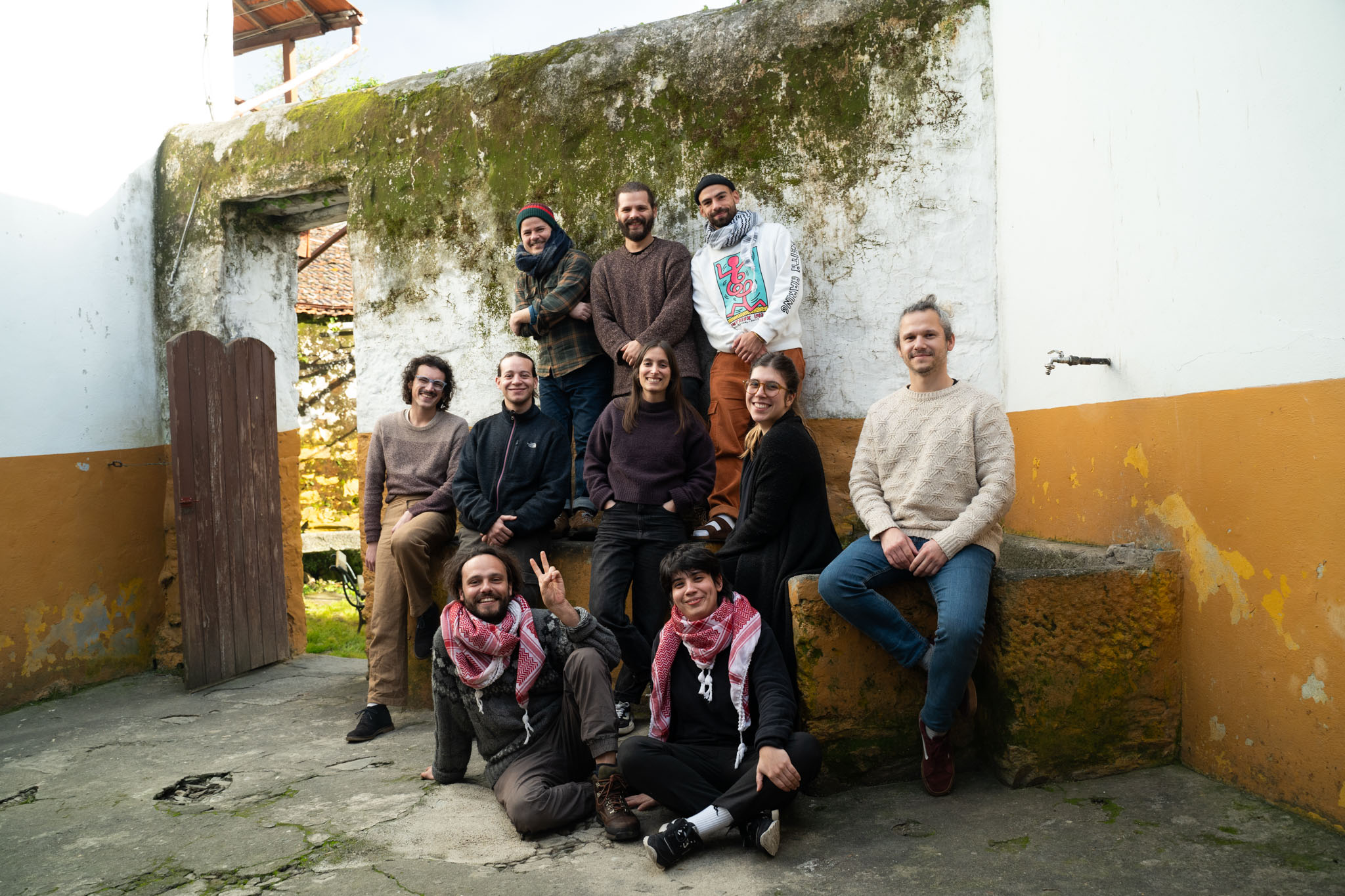
Resisting advertising models and restrictive grants hasn’t been easy. In 2022, Open Society Foundations substantially reduced its media programme, cutting funding for journalism projects in Europe, including Fumaça. Despite gains from its membership model, the newsroom was forced to question how long it could continue. The answer came at a critical moment. “Exactly the week salaries were delayed, Limelight Foundation stepped in with a three-year grant,” Ribeiro says. “It allowed us to focus on journalism rather than fundraising. It gave us space to breathe.”
That breathing space mattered. Multi-year flexible funding like Limelight’s meant instead of chasing small, story-restricted grants, Fumaça could double down on its audience model and experiment. The team maintained its decision to publish without a paywall in line with its values of transparency and accessibility. They also redirected time towards distribution: expanding listening sessions, purchasing audio equipment for events outside major cities, reshaping public programmes to run alongside ongoing investigations, and growing their community of members. For Fumaça, Limelight’s funding has provided stability and room for innovation.
Organisations like Fumaça, who are not afraid to challenge the status quo with their unwaning commitment to transparency, also push others to explore how they can be more transparent in their work. When Fumaça wanted to publish their funding agreement from Limelight, it prompted internal discussion at the foundation about how grant contracts are written and shared.
Today, Fumaça continue to produce deep-dive investigations, sometimes years in the making, while growing its membership base and expanding its outreach. Increasingly, their reporting is encountered not only online, but in shared settings organised around its release. Their membership income and their subscribers grow slowly and steadily, helping them get closer and closer to their ambitious goal of becoming 100% audience-funded.
“We did something that really looked impossible in the beginning” reflects Ribeiro on building a model that puts people and public interest before profit. But now they are 50% audience funded. Looking forward, Fumaça plan to continue to deliver journalism in the public interest, foster community, and inspire others to rethink how media can serve society.

